Sleep Anxiety
Why Sleep Trackers Make Insomnia Anxiety Worse
Written by Samuel Michelot. Reviewed by Pilar Hostaled, registered psychologist. · Last updated August 2026
Quick answer
Sleep trackers can worsen insomnia anxiety because they turn sleep into a score you monitor and chase. The numbers are estimates, not medical truth, yet a bad score can ruin your day and a fear of a bad score can ruin your night. For anxious sleepers, taking a break from the tracker often helps more than any feature.
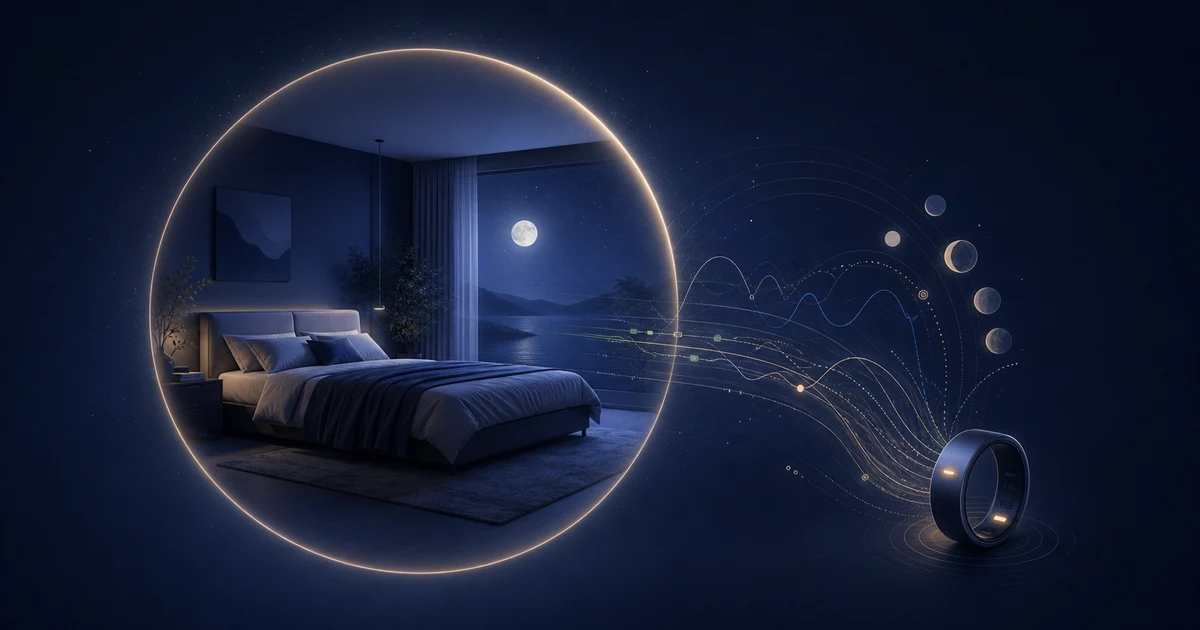
A sleep tracker feels like it should help. You want data, you want reassurance, you want to know if you slept “enough.” But for many people with insomnia, the tracker quietly becomes part of the problem. There is even a name for the pattern of anxiety around perfect sleep data: orthosomnia.
The core issue is that trackers turn sleep into a performance with a score. And the surest way to keep yourself awake is to monitor whether you are sleeping.
Why the numbers backfire
Consumer trackers estimate sleep stages from movement and heart rate. They are reasonable for trends but not precise for any single night, and they often disagree with how you actually felt. So you wake feeling fine, see a low score, and decide the day is ruined. Or you wake feeling rough, see a high score, and distrust the device. Either way, the number becomes the judge of your day.
Worse, checking the score first thing trains your brain to treat sleep as a test you can pass or fail, which raises the very arousal that prevents sleep.
What to do tonight
Take a break from the tracker, ideally a week or two. Judge your sleep by how you feel and function, not by a graph. If you keep the device, stop looking at the nightly score, especially in the morning, and never check it during a night waking. Let the goal be a calmer relationship with sleep, not a better number.
What to avoid
Avoid checking your score in bed or during the night. Avoid changing your routine to chase a metric. Avoid treating a single night’s data as a verdict on your health.
When to talk to a clinician
If you suspect a real disorder, such as loud snoring with breathing pauses, a clinical sleep study is the right tool, not a wearable. If anxiety about sleep data is dominating your day, CBT-I can help you step out of the monitoring loop.
Sources
- American Academy of Sleep Medicine, position on consumer sleep technology: https://aasm.org/consumer-sleep-technology-not-ready-to-replace-clinical-evaluation/
- Sleep Foundation, sleep trackers: https://www.sleepfoundation.org/sleep-technology/sleep-trackers
- American Academy of Sleep Medicine, behavioral and psychological treatments for chronic insomnia: https://pmc.ncbi.nlm.nih.gov/articles/PMC7853203/
Get your free Sleep Expert Review
Personalized assessment, two downloadable audios, and a first CBT-I based recommendation for your pattern.
Start my free assessment